Best Duramax Turbo Upgrades: Stock Replacements to Compounds
How to choose a turbo for your GM Duramax — which turbo came on your engine, how to fix a sticking VGT, and when to step up to a drop-in upgrade or compounds on the LB7, LLY, LBZ, LMM, LML, and L5P.
Parts Covered in This Guide
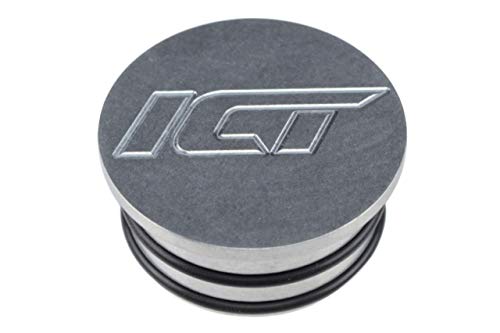
Restoring boost or chasing more power

Reliable fueling at stock or elevated power

Reliable fueling at stock or elevated power
| # | Product | Owner Reviews | Availability | Best For | |
|---|---|---|---|---|---|
| 1 | 406 | $23.00 In Stock at Amazon | Restoring boost or chasing more power | ||
| 2 | 4,290 | $21.00 In Stock at Amazon | Reliable fueling at stock or elevated power | ||
| 3 | 326 | $18.99 In Stock at Amazon | Reliable fueling at stock or elevated power |
Few upgrades change how a Duramax drives like the turbo. Whether you’re chasing lost boost on a high-mileage truck, replacing a worn-out unit, or building for serious power, this guide covers all three paths — restore, upgrade, or compound — starting with the part most buyers skip: figuring out which turbo is actually bolted to your engine. It points you to new parts and supporting hardware on Amazon and to used/OEM turbos on eBay Motors, where the big-ticket hard parts really live.
Which Turbo Came on Your Duramax
Turbo parts are sold by engine code, not by model year, and the 2004.5 and 2007 split years catch people out constantly. Confirm your engine from the eighth character of the VIN using the VIN & engine-code decoder before you buy, then find your row:
| Engine (years) | Factory turbo | Vane control | What owners run into |
|---|---|---|---|
| LB7 (2001–2004) | IHI fixed-geometry, wastegated | Mechanical wastegate | Smallest of the family and the only non-VGT. No exhaust brake. LB7 pain is usually injectors, not the turbo |
| LLY (2004.5–2005) | Garrett variable-geometry (first VGT Duramax) | Electronic vane actuator | Vane sticking; the LLY also runs hot towing, and its restrictive turbo inlet mouthpiece is a known airflow choke |
| LBZ (2006–2007) | Garrett VGT | Electronic vane actuator | The favorite build platform — the stock VGT is usually what runs out of air first on a tuned LBZ |
| LMM (2007.5–2010) | Garrett VGT | Electronic vane actuator | First DPF generation; soot loading makes vane sticking more likely with age |
| LML (2011–2016) | Revised Garrett VGT | Electronic vane actuator | Vanes also perform factory exhaust-brake duty, so a sticking mechanism costs you the brake too |
| LGH (2011–2016) | Lower-output VGT (van / chassis-cab) | Electronic vane actuator | Same exhaust-brake-via-vanes architecture as the LML, so a sticking mechanism costs you the brake too. Parts often listed only under LML — check fitment against the VIN |
| L5P (2017+) | Larger electronically controlled VGT | Electronic vane actuator | Far more airflow from the factory; most L5P owners never touch the turbo unless they’re building |
The practical takeaway: on an LB7 you’re shopping fixed-geometry turbos; on everything else you’re shopping VGT units, and half the “bad turbo” cases aren’t the turbo at all.
Start With Your Power Goal
The right turbo depends entirely on target power and how you use the truck. A daily-driven, tow-focused L5P that just wants its factory boost back has very different needs from a built LBZ chasing serious horsepower. Be honest about the goal before you buy — it decides everything downstream, including how much of the rest of the truck you’re about to have to upgrade.
Three honest categories:
- Restore — the turbo is tired, sticking, or dead and you want factory drivability back. Cheapest path, and the right one for most trucks.
- Upgrade — you want more air than stock with no fabrication and no drama. A drop-in, stock-frame turbo.
- Compound — you want big power or big towing torque and you’re prepared to build the supporting systems around it.
Restore: The VGT Vane-Sticking Problem
This is the single most common Duramax turbo complaint, and it’s worth understanding before you spend anything.
A variable-geometry turbo works by moving a ring of vanes in the turbine housing. Closed, they speed exhaust gas up for fast spool and low-rpm response; opened, they let the turbo flow at high rpm without choking. That mechanism lives in the hottest, sootiest part of the engine. Over years of idling, short trips, EGR flow, and — on DPF trucks — regeneration cycles, carbon builds up on the vane mechanism until it binds.
Symptoms of a sticking VGT:
- Sluggish spool and a truck that feels “flat” off the line
- Low or erratic boost, or boost that surges and hunts
- Loss of the factory exhaust brake’s effectiveness on LML, LGH, and L5P trucks
- Underboost and vane-position trouble codes — commonly P0299 (underboost), P003A (boost control position not learned), P2563 (boost control position sensor range/performance), and P0045/P0046 (vane control circuit)
The fix is usually cheaper than the diagnosis suggests. In rough order of cost:
- Rule out the free stuff first. A blown-off intercooler boot, a cracked charge pipe, a loose clamp, a plugged air filter, a leaking up-pipe, or a loaded DPF all produce the same underboost symptom for a fraction of the money.
- Clean the vane mechanism. A de-soot and reseal frees a mechanism that’s binding rather than worn, and it’s the standard first move on a high-mileage VGT.
- Replace the vane position actuator or sensor. On LLY through LML trucks the electronic actuator is a separately serviceable part, and it fails on its own. A perfectly healthy turbo with a dead actuator behaves exactly like a broken turbo.
- Fit a rebuild kit or a replacement cartridge. The move once bearings and seals are worn but the housings are good.
- Replace the turbo. Correct when the shaft has play you can feel side to side, the wheels are chewed or rubbing, or oil is passing into the intake.
Use the eBay Motors buttons below for VGT units, actuators and vane position sensors, and rebuild kits — actuators in particular are exactly the kind of OEM part eBay serves better than anywhere else.
Prevention is real, too: the trucks that stick vanes are overwhelmingly the ones that idle a lot and never see sustained load. Regular highway driving, a healthy EGR system (see the EGR & cooling guide), and completed regen cycles all slow carbon buildup.
Upgrade: Drop-In Turbos
A drop-in upgrade turbo is the sweet spot for most owners — noticeably more airflow and power with near-stock drivability and no fabrication. A stock-frame VGT upgrade bolts into the factory location, uses the factory exhaust plumbing, and keeps electronic vane control, which means it keeps the exhaust brake on the trucks that have one and keeps low-rpm response civilized. For a towing truck, that last point matters more than peak numbers.
The alternative — a larger fixed-geometry upgrade turbo — usually trades low-end response and the exhaust brake for more top-end capability. It’s the right call for a truck built around high power, and the wrong call for a truck that mostly tows.
Whichever you pick, the turbo is one link in an airflow chain, and the chain only flows as well as its worst link:
- In: a cold air intake and an unrestricted turbo inlet so the compressor gets cool, dense air
- Out: an exhaust system that isn’t the new restriction — flow is also how you keep exhaust gas temperature down
- Control: a tuner or programmer to add the fuel the extra air can burn, and to show you EGT and boost while you find out whether it’s working
Compounds: Big Power, Big Commitment
Compound turbos stack a large atmospheric charger feeding a smaller high-pressure unit, producing huge airflow and enormous towing torque across a wide rpm range. They make serious power, and on a heavy truck they pull where a single turbo has given up.
They are also a build, not a bolt-on. Expect real fabrication, packaging work, oil feed and drain plumbing, and a supporting-parts list that isn’t optional:
- Fuel: injector and fuel-system capacity to feed the air you’ve added — air without fuel is just noise
- Clamping: head studs, because cylinder pressure is what lifts a head, and compounds raise it a lot
- Driveline: transmission capability to survive the torque
- Instrumentation: EGT, boost, and transmission temperature gauges, fitted before the power, not after the failure
Buying a Used or OEM Turbo
Turbos are a category where eBay Motors genuinely beats a new-parts search — OEM units, take-offs from low-mileage trucks, cartridges, and hard-to-find actuators all live there. What to check before you commit:
- Engine code, not year. An LBZ and an early LMM are both “2007,” and they are not the same order. Decode the VIN first.
- Shaft play. Ask the seller about in-and-out and side-to-side play at the wheels. Side-to-side play you can feel means worn bearings.
- Wheel condition. Photos of both the compressor and turbine wheels — chips, bent blades, or rub marks on the housing are disqualifying.
- Does it include the actuator? Many listings don’t, and the actuator is a meaningful part of the value.
- Core charge and return policy. Rebuilt units frequently carry a core charge; know the terms before you buy.
- Oil in the compressor housing. A film of oil points to failed seals and a unit that will smoke.
While the Turbo Is Off
The labor to get a Duramax turbo out is the expensive part of the job, so do the adjacent items while you’re in there rather than paying to go back:
- Up-pipes and their gaskets — a known leak point on the earlier trucks, and a leaking up-pipe mimics a failing turbo exactly
- Oil feed and drain lines — cheap parts, and a restricted feed line is a good way to kill a new turbo
- Turbo mounting and exhaust gaskets — never reuse them
- Turbo inlet hardware — the factory inlet mouthpiece on LLY/LBZ/LMM trucks is a documented restriction, and it’s never easier to change than right now
- Air filter and intake tract — a new turbo deserves clean air; see the maintenance schedule
For where each generation is weak beyond the turbo, see common Duramax problems by generation, and use the generations & fitment reference to confirm the platform before ordering.
Supporting Parts for a Turbo Job
The turbo itself is usually a used/OEM purchase — the buttons above are the better rail for that. The supporting hardware is where Amazon Automotive earns its place: the turbo inlet piece on the 2004.5–2010 trucks, and clean fuel, because the fastest way to undo a boost upgrade is to starve or contaminate the fuel side while you’re adding air. Filter kits are split by era — the 2001–2016 trucks and the 2017+ L5P take different assemblies, so match yours by engine code.
Where to Buy
- New upgrade turbos, rebuild kits, and supporting hardware: Amazon Automotive — see the turbos category.
- Used, OEM, and take-off VGT units, actuators, and vane sensors: eBay Motors, using the buttons above. Six searches are wired up here — one per generation plus dedicated actuator, rebuild-kit, and compound-kit searches — because “duramax turbo” as a single search is where good listings go to hide.
Shopping used or OEM? Try eBay Motors
Live listings for the parts covered in this guide — prices set by the seller.
Live auctions ending soon
LIVEReal-time eBay auctions · bids shown are current · tap a card to bid on eBay
Browse every live “duramax lb7 turbo 2001 2004” listing on eBay →
Recommended Parts for This Guide
ICT Billet Duramax Turbo Diesel 2004.5-10 LBZ LLY LMM Mouth Piece Resonator Noise Reduction Plug Cover Cap 6.6L Seal Billet Aluminum Made in America ICT Billet 551503
406 owner reviews
ICT Billet Duramax Turbo Diesel 2004.5-10 LBZ LLY LMM Mouth Piece Resonator Noise Reduction Plug Cover Cap 6.6L Seal Billet Aluminum Made in America ICT Billet 551503. Turbocharger hardware for the Duramax — restore lost boost or add drop-in and compound turbo power.
- Restores lost boost
- Drop-in & upgrade options
GM Genuine Parts TP1015 (13539108) Fuel Filter Kit with Seals
4,290 owner reviews
GM Genuine Parts TP1015 (13539108) Fuel Filter Kit with Seals. Fuel-system hardware to keep the Duramax fed reliably at stock and elevated power.
- Reliable fuel delivery
- Supports higher power
TP1015 Fuel Filter for 6.6L Duramax Diesel Compatible with 2017-2025 Chevy Silverado/GMC Sierra 2500HD 3500HD, 2014-2019 Chevy Cruze | Replaces# 23304096, 13539108, 23456595, with Seals (2 Pack)
326 owner reviews
TP1015 Fuel Filter for 6.6L Duramax Diesel Compatible with 2017-2025 Chevy Silverado/GMC Sierra 2500HD 3500HD, 2014-2019 Chevy Cruze | Replaces# 23304096, 13539108, 23456595, with Seals (2 Pack). Fuel-system hardware to keep the Duramax fed reliably at stock and elevated power.
- Reliable fuel delivery
- Supports higher power