Best Duramax Exhaust Systems: DPF-Back, Cat-Back & Downpipes
How to choose an exhaust for your GM Duramax — DPF-back vs. cat-back vs. turbo-back, 4-inch vs. 5-inch diameter, aluminized vs. 409 vs. 304 stainless, the manifold and up-pipe leaks no kit fixes, and why freer flow drops EGTs on the LB7, LLY, LBZ, LMM, LML, LGH, and L5P.
Parts Covered in This Guide

Owners chasing flow and diesel tone
Restoring boost or chasing more power
| # | Product | Owner Reviews | Availability | Best For | |
|---|---|---|---|---|---|
| 1 | 60 | $18.75 In Stock at Amazon | Owners chasing flow and diesel tone | ||
| 2 | 406 | $23.00 In Stock at Amazon | Restoring boost or chasing more power |
The exhaust is the outlet half of your Duramax’s airflow package — the more freely the engine can breathe out, the cooler and cleaner it runs under load. This guide covers the four decisions that actually matter (where the system starts, how big, what material, how loud), the per-generation hardware that decides what fits, and the exhaust-side parts no kit includes but that fail far more often than the pipe does. New parts are on Amazon; used, OEM and take-off exhaust parts are eBay Motors territory.
The Anatomy: What “Back” Means
Every system name is just a description of where it starts. Front to back, a Duramax’s exhaust path is:
exhaust manifolds → up-pipes → turbo → downpipe → catalytic converter (or DOC + DPF on emissions trucks) → SCR/DEF section (LML and later) → muffler/resonator → tailpipe.
Everything sold as a “system” replaces a section of that path from some point rearward:
| System | Starts at | What it retains | Who it’s for |
|---|---|---|---|
| DPF-back | Immediately behind the diesel particulate filter | DOC, DPF, and SCR/DEF hardware — all of it | The street-legal path on any LMM, LML, LGH or L5P |
| Cat-back | Behind the catalytic converter | The factory cat | Pre-DPF trucks (LB7, LLY, LBZ) that want flow and tone with emissions intact |
| Turbo-back | At the turbo outlet | Nothing downstream — includes the downpipe | Off-road and competition use only when it removes cat or DPF |
| Downpipe only | Turbo outlet to the first joint | Everything behind it | Freeing the tightest bend in the system without touching the rest |
The distinction is not marketing. On an emissions-era truck a DPF-back keeps every piece of aftertreatment on the vehicle and is the only version of this upgrade that belongs on a road truck.
What Your Engine Came With
Order by engine code, not by model year — 2007 alone came two different ways. If you are not certain which you have, the VIN & engine-code decoder reads it off the eighth digit of the VIN in about thirty seconds, and the generations & fitment guide puts each code on its truck platform.
| Engine | Years | Aftertreatment | Factory exhaust brake | What that means for exhaust |
|---|---|---|---|---|
| LB7 | 2001–2004 | Catalytic converter only | No | Cat-back or turbo-back; downpipe is a common first move |
| LLY | 2004.5–2005 | Catalytic converter only | No | Same as LB7, and the generation most sensitive to heat — flow matters here |
| LBZ | 2006–2007 | Catalytic converter only | No | The pre-DPF favorite; responds well to airflow and a tune |
| LMM | 2007.5–2010 | DOC + DPF, active regeneration | No | First DPF generation — DPF-back is the street path |
| LML | 2011–2016 | DOC + DPF + SCR/DEF | Yes, via the variable-vane turbo | DPF-back, and there is DEF plumbing to route around |
| LGH | 2011–2016 (vans/cab-chassis) | DOC + DPF + SCR/DEF | Yes | Same architecture as the LML in a different chassis — order by engine code, never by body |
| L5P | 2017+ | DOC + DPF + SCR/DEF | Yes | The most factory flow in the family; DPF-back gains are mostly tone and modest EGT relief |
Note the exhaust-brake row. On the LML and later, the “exhaust brake” is the turbo’s own variable vanes rather than a separate butterfly valve — which is one more reason a healthy variable-geometry turbo matters on those trucks. Pre-LML owners who want engine braking are shopping for an add-on brake, not a pipe.
Diameter: 4-Inch vs. 5-Inch
For a stock-to-mild truck — including most daily drivers and tow rigs — a 4-inch system flows plenty, tucks up cleanly, and is easy to keep quiet. Step up to 5-inch once you’re running a bigger turbo, more fuel, and a tune and you want every bit of help dropping EGTs under heavy load. On an otherwise stock truck, 5-inch mostly buys sound and presence rather than measurable power.
Diameter is also not the whole flow story. A mandrel-bent 4-inch system — smooth bends that hold full diameter through the curve — flows better than crush-bent 5-inch pipe that necks down at every turn. Check the bends and the muffler, not just the number on the box.
Materials: Aluminized, 409, or 304
Three tiers, and the right one is mostly a road-salt question:
- Aluminized steel — the budget tier. Fine on a truck that lives in a dry climate; surface rust arrives early anywhere they salt roads.
- 409 stainless — the common mid-tier and the sweet spot for most owners. Far better corrosion resistance than aluminized, and it will develop a dull patina rather than staying bright.
- 304 stainless — the premium tier. Stays bright, resists salt best, costs the most. Worth it on a truck you plan to keep, or if the tips are visible and you care.
Sound, and Why Flow Drops EGTs
Diesel tone is set mostly by the muffler — or its absence. A straight-through (perforated core) muffler is loud and free-flowing; a chambered muffler stays civil for a daily driver; a muffler-delete pipe is the loudest and the most likely to drone at highway cruise. Drone is the complaint that sends people back under the truck, and a resonator is the usual cure. Tip diameter and shape change the character more than the volume, and on a single-turbo diesel a dual-exit setup is cosmetic — it splits one gas stream, it does not double flow.
The functional win is not sound, it’s flow: less backpressure lets the turbo spool cleaner and lowers exhaust gas temps, which is exactly what you want dragging a heavy trailer up a grade. That’s why an exhaust pairs so naturally with a tuner or monitor that displays EGT and boost — otherwise you have improved a number you cannot see.
The Exhaust Parts No Kit Includes: Manifolds and Up-Pipes
This is the section most exhaust shopping skips, and on a 2001–2016 truck it is more likely to be your actual problem than the muffler is.
Ahead of the turbo sit two cast exhaust manifolds and the up-pipes that carry gas from them into the turbine housing. They live through the biggest temperature swings of any part in the system, and they are a known Duramax wear point: cracked manifolds, leaking up-pipe joints, and fasteners that snap on removal rather than back out.
How a leak up there announces itself:
- A tick on cold start that fades as the engine warms — cold metal leaves the crack open; expansion closes it.
- A hiss or whistle that changes with boost, loudest under load.
- Soot tracks radiating from a manifold-to-head or up-pipe flange — the surest visual confirmation.
- Slower spool and higher EGTs than the truck used to make, because gas that should be spinning the turbine is escaping ahead of it.
Fixing it is a fastener job as much as a parts job. The bolts have been heat-cycled for a decade or more and shear readily, which is why a fresh 12-point up-pipe bolt set is standard equipment for this work on 2001–2016 trucks — the ones that come out are not going back in. Plan for gaskets, penetrating oil, and the possibility of extracting a stud.
If the heads are coming off anyway, this is the moment to do it: see the head gasket & head stud guide for the “while you’re in there” list, and common Duramax problems by generation for what else is age-related on your specific engine.
Living With a DPF (LMM, LML, LGH, L5P)
On emissions-era trucks the filter, not the pipe, governs how the exhaust behaves. Soot collects in the DPF and is burned off during regeneration, where the truck raises exhaust temperature by adding fuel — late in the cylinder cycle or directly into the exhaust stream, depending on generation.
Two facts do most of the work here:
- Soot burns; ash does not. Regeneration clears soot. Ash — largely from oil additives — accumulates permanently and eventually requires professional cleaning or replacement. That is why mileage matters more than driving style for ash, and driving style matters more than mileage for soot.
- Frequent regens are a symptom, not a setting. Short trips, heavy idling, and interrupted regens all load the filter faster than it clears. So does a failing EGR system or a leaking injector putting extra fuel into the exhaust.
Restriction and efficiency faults on this system store the generic OBD-II codes — P2002 (filter efficiency below threshold), P2463 (restriction, soot accumulation) and P242F (restriction, ash accumulation) are the ones that point here. They narrow the search; they do not replace a backpressure reading. And none of them are fixed by a DPF-back system, which starts behind the filter.
An OEM or take-off replacement DPF is a legitimate, emissions-intact repair and a good use of eBay Motors — the rails above include a search for exactly that.
Before You Order: The Fitment Checklist
- Engine code first. LMM, LML and L5P systems are not interchangeable. Decode the VIN if there is any doubt — a 2007 truck is an LBZ or an LMM.
- Cab and bed configuration. Some kits are specified by cab style and bed length; read the fitment note rather than assuming one part number covers the range.
- What’s in the box. Muffler included, or is it a muffler-delete pipe? Are clamps, hangers and the tip in the kit, or extra?
- Clamps vs. welded. Band clamps seal better than slip-fit lap joints and still let you take the system apart later.
- Hangers and isolators. Rubber isolators harden with age; a new system on tired hangers will find something to rattle against.
- Tip fitment. Check the tip diameter and exit against the bumper cutout, the tire, and anything you tow behind.
- DEF and sensor plumbing (LML and later). Aftertreatment sensors and lines route through this area — a kit that ignores them is not a street kit.
Support It With the Rest of the Airflow Chain
Exhaust is one link in the chain. To get the full benefit, feed the engine cool, dense air with an upgraded cold air intake and an unrestricted turbo inlet — on a 2004.5–2010 LLY/LBZ/LMM that means the factory intake mouthpiece resonator, which is the known restriction on the way in. Make sure the turbo is healthy and sized for your goal, and let a tuner take advantage of the improved flow. Freer breathing also eases the load on the EGR and cooling system by keeping temperatures in check, and the maintenance schedule covers the filters and fluids that keep all of it working.
Still deciding which truck to build? LB7 vs. L5P and LBZ vs. L5P compare the generations by what they need first — and the exhaust answer is different at each end of that range.
Where to Buy
- New DPF-back, cat-back, and turbo-back systems, clamps, and hardware: Amazon Automotive — browse the exhaust category and the performance parts that pair with it.
- Used, OEM, and take-off downpipes, manifolds, up-pipes, exhaust brakes and replacement DPFs: eBay Motors, using the buttons above. Factory take-off and OEM exhaust hardware is squarely eBay Motors territory, and listing prices there are shown live.
Shopping used or OEM? Try eBay Motors
Live listings for the parts covered in this guide — prices set by the seller.
Live auctions ending soon
LIVEReal-time eBay auctions · bids shown are current · tap a card to bid on eBay
Browse every live “duramax dpf back exhaust lml l5p” listing on eBay →
Recommended Parts for This Guide
Precision Parts 12 Point Up Pipe Bolt Set Compatible with 2001-2016 Chevy Silverado/GMC Sierra 6.6L LBY LLY LBZ LMM LML Duramax Diesel
60 owner reviews
Precision Parts 12 Point Up Pipe Bolt Set Compatible with 2001-2016 Chevy Silverado/GMC Sierra 6.6L LBY LLY LBZ LMM LML Duramax Diesel. Free up flow and add a deeper diesel tone to your Duramax with this bolt-on exhaust upgrade.
- Deeper diesel tone
- Improved exhaust flow
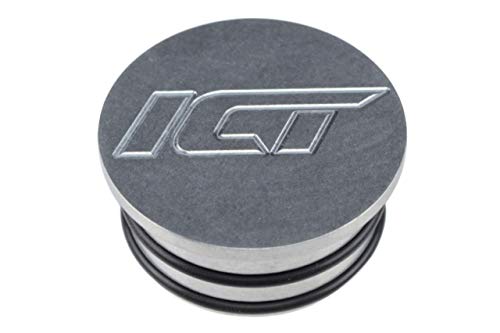
ICT Billet Duramax Turbo Diesel 2004.5-10 LBZ LLY LMM Mouth Piece Resonator Noise Reduction Plug Cover Cap 6.6L Seal Billet Aluminum Made in America ICT Billet 551503
406 owner reviews
ICT Billet Duramax Turbo Diesel 2004.5-10 LBZ LLY LMM Mouth Piece Resonator Noise Reduction Plug Cover Cap 6.6L Seal Billet Aluminum Made in America ICT Billet 551503. Turbocharger hardware for the Duramax — restore lost boost or add drop-in and compound turbo power.
- Restores lost boost
- Drop-in & upgrade options